What Percent Body Fat Is Stage-Ready?
There is no official body-fat percentage that makes a bodybuilder “stage-ready.”
You can find plenty of numbers online. Research on physique athletes has documented male competitors reaching roughly the mid-single digits and female competitors reaching the low teens. Other competitors have stepped onstage at higher or lower measured percentages.
But those numbers are observations, not judging standards.
Bodybuilding federations do not generally decide whether you are ready by putting you on a DEXA scanner and checking whether you have crossed a particular percentage. Judges assess the physique they can see: muscularity, conditioning, symmetry, proportions and presentation according to the standards of your category.
That means two competitors can record the same body-fat percentage and look very different onstage.
And two competitors in different divisions may be appropriately stage-ready at very different levels of conditioning.
So if you're trying to determine whether you are lean enough to compete, body-fat percentage can be useful information. It just cannot answer the question by itself.
What Body-Fat Percentages Do Bodybuilders Actually Reach?
There are some useful numbers from published research—as long as we don't turn them into targets.
A systematic review of case studies involving 15 drug-free physique athletes found that the eight male competitors reached an average reported pre-competition body-fat level of about 5.8%, while the seven female competitors averaged about 13.1%.
All of the men in those case studies were measured below 10% body fat. Only one of the women reached a single-digit measurement.
There is an important limitation, though: the female athletes in the review competed in Figure or Bikini rather than Women's Physique or Women's Bodybuilding. Those divisions do not necessarily reward the same level of leanness and muscularity. The researchers specifically noted that division differences could partly explain the results.
Another review discussing physique competition has described competition body-fat levels generally around 4–6% for men and 10–13% for women.
Those figures give us a picture of the extreme leanness that can occur in physique competition.
They do not establish 6% for men or 13% for women as a requirement.
A Bikini competitor should not read “10–13%” and conclude that 10% must be better than 13%.
A male bodybuilder should not see “4–6%” and decide that getting to 4% will automatically improve his placing.
The research describes what has been observed in competitors. It does not tell you exactly where your physique should be.
Why Isn't There One Stage-Ready Percentage?
Because bodybuilding judges are judging appearance, not a laboratory measurement.
Suppose two competitors are both measured at 10% body fat.
One may carry more fat through the lower body. Another may carry more through the midsection.
They may have different amounts of muscle.
Their muscle shape and proportions may differ.
One may present substantially more visible definition than the other.
Then add another complication: the measurement itself.
“10% body fat” is not necessarily one perfectly objective biological fact that every available testing method will reproduce identically.
DEXA, skinfold measurements, bioelectrical impedance and other body-composition methods estimate body composition in different ways and have their own sources of measurement error.
So asking whether someone is stage-ready because a machine says “8.7%” gives the measurement more authority than it deserves.
The number can help track what is happening.
The physique determines what the judges see.
Your Division Changes the Answer
This is probably the biggest reason a universal stage-ready percentage does not work.
Different bodybuilding categories deliberately reward different levels of muscularity and conditioning.
Consider Bikini.
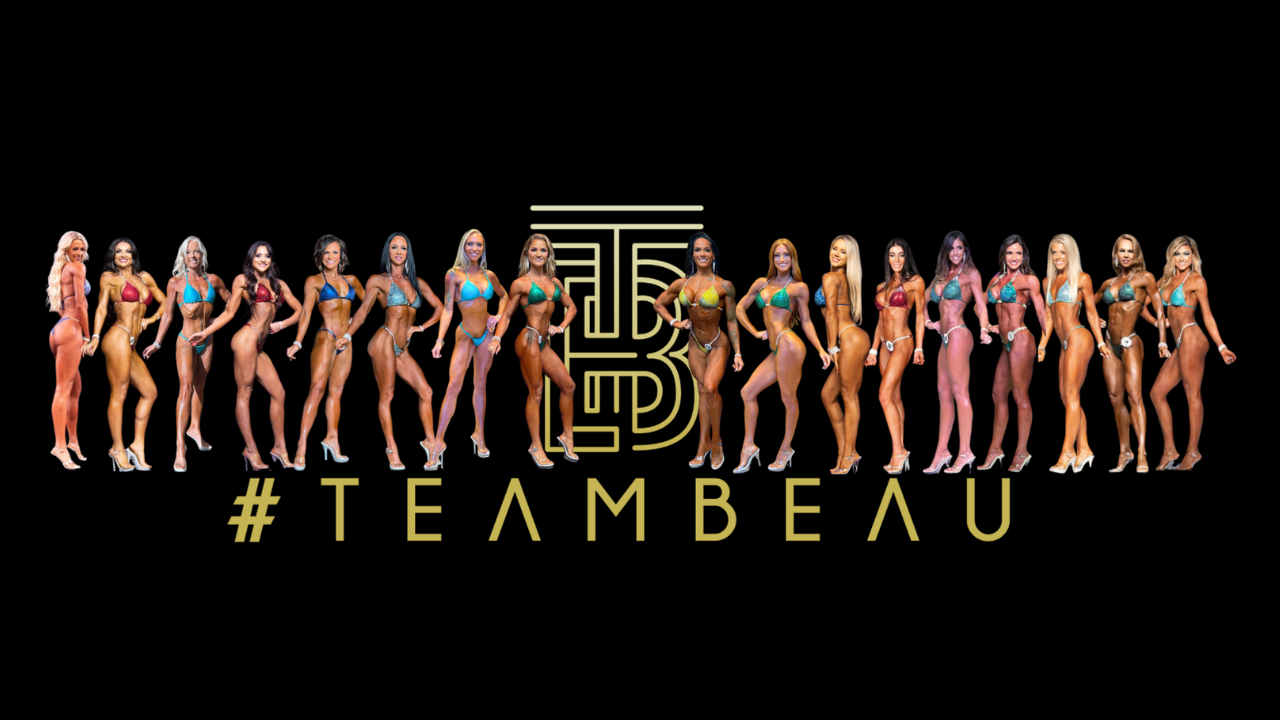
Current NPC judging criteria say Bikini athletes should display a foundation of muscle, full glutes, some delt roundness and a conditioned core. But competitors should not display the muscular density and separation associated with Figure, or graininess and striations.
The OCB makes a similar distinction. Its Bikini guidelines call for a lightly muscled physique that is not overly lean or hard compared with Figure, Wellness or Women's Physique.
In other words, becoming visibly harder and more striated can eventually take a Bikini competitor away from the standard rather than toward it.
That alone makes “What body-fat percentage should a female bodybuilder reach?” the wrong question.
A Bikini athlete and a Women's Physique athlete are not trying to produce the same stage look.
Stage-Ready for Bikini Is Not Stage-Ready for Figure
This distinction deserves attention because women's divisions are particularly vulnerable to misleading percentage targets.
Bikini does require conditioning.
But it also calls for a particular degree of softness relative to the more muscular categories. Current NPC standards specifically mark down characteristics such as graininess and striations.
Figure moves toward greater muscularity and separation.
Women's Physique requires still more muscular development and a highly conditioned look.
Wellness has another standard again. NPC guidance calls for conditioning around the Bikini level while carrying somewhat more muscle and specifically asks for some lower-body separation without striations.
So imagine telling every female physique competitor:
“You need to reach X percent body fat.”
It immediately ignores what the divisions were created to distinguish.
The better target is the conditioning standard of your category.
The Same Problem Exists in Men's Divisions
Men also compete under different physique standards.
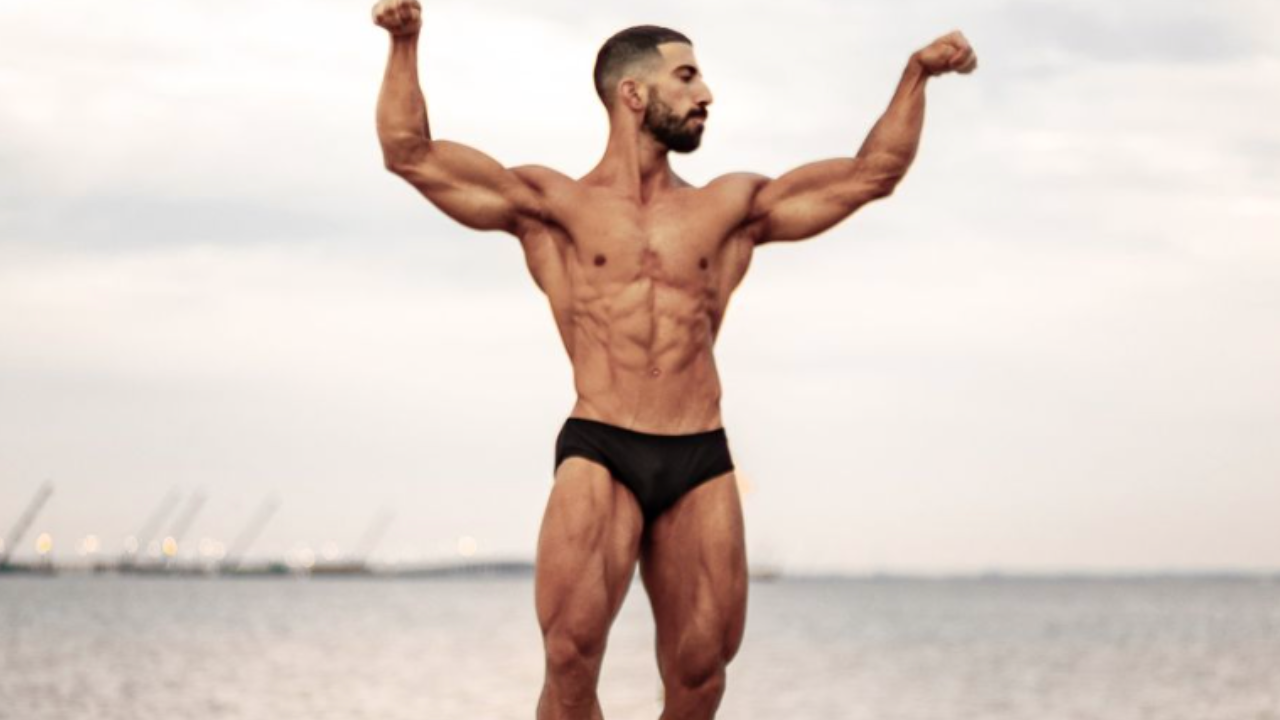
Men's Bodybuilding rewards substantial muscularity and a high degree of conditioning.
Classic Physique requires significant muscular development but places particular emphasis on classic proportions, symmetry and shape.
Men's Physique is intended to present a different level of muscularity and conditioning again.
A Men's Physique competitor therefore shouldn't simply use the body-fat number of a highly conditioned Bodybuilding competitor as his goal.
The division matters.
This is one of the reasons competitors should read the actual judging criteria for their federation rather than relying on a chart of supposedly ideal bodybuilding body-fat percentages.
What Does “Conditioning” Actually Mean?
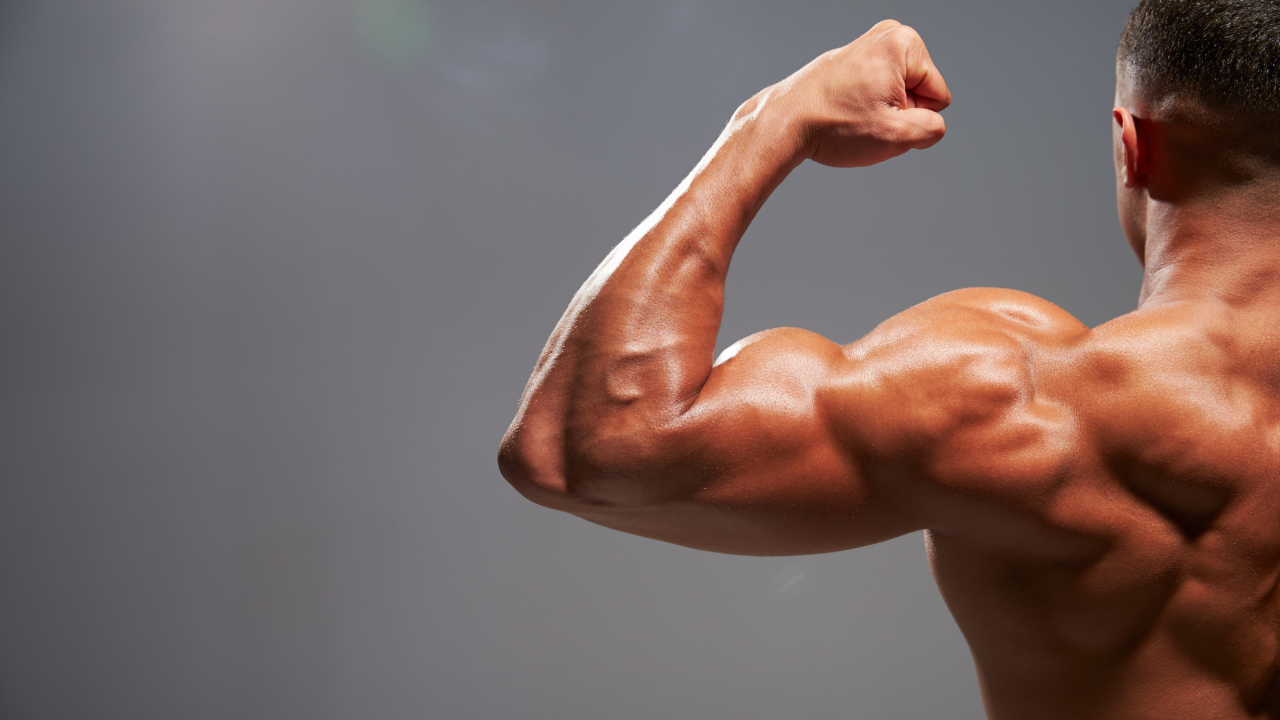
In bodybuilding, conditioning describes how clearly the physique displays the muscular definition appropriate for the category.
As body fat decreases, muscular detail generally becomes easier to see.
Depending on the division, judges may be looking for some combination of:
-
Clear muscular shape
-
Separation between muscle groups
-
Visible abdominal definition
-
Definition through the legs
-
Glute and hamstring separation
-
Vascularity
-
Striations
-
An overall lean or hard appearance
But not every item on that list is desirable in every division.
A striated appearance may contribute to the look expected in a highly conditioned bodybuilding category while being explicitly undesirable in Bikini.
That is why “conditioning” is more useful competition language than simply “low body fat.”
It connects leanness to what the division actually requires.
Can You Be Too Lean for Your Division?
Visually, yes.
This is easiest to see in divisions whose official criteria explicitly discourage excessive conditioning.
OCB Bikini judging guidelines state that excessive muscularity, striations and vascularity are marked down. NPC Bikini criteria likewise say competitors should not display graininess or striations.
So getting progressively leaner does not guarantee that your physique is moving closer to the judging standard.
There is also a broader issue.
Contest preparation can produce substantial physiological changes as body fat and energy availability decrease.
The systematic review of physique competitors found changes during preparation that included reductions in resting metabolic rate, changes in hormones, increased hunger-related signals, reduced strength or power in some measures, and menstrual disruption among female competitors.
In the male case studies, testosterone commonly fell below normal physiological levels during contest preparation.
That does not mean every competitor will experience every effect.
It does mean that extreme contest leanness should not be treated as an ordinary year-round fitness condition or something that is automatically better when pushed further.
The goal of competition preparation is not to see how low you can make a body-fat measurement.
Can You Be Too High in Body Fat to Be Stage-Ready?
Yes—in the practical sense that your conditioning may not yet reveal what judges need to assess.
If body fat obscures muscular shape, separation and definition expected in your division, you may not be competitively conditioned yet.
Again, the judge does not need to know the percentage.
The visual result tells the story.
This is particularly important for first-time competitors who may have built substantial muscle but have never dieted to competition condition.
You can be muscular enough for a division while not yet being conditioned enough for it.
The reverse can happen too.
Someone can become extremely lean without having developed the muscularity or proportions their category requires.
Leanness cannot substitute for muscle.
Muscle cannot substitute for appropriate conditioning.
The judging standard asks for both in the balance appropriate to the category.
Why DEXA Can Still Be Useful
If body-fat percentage doesn't determine stage readiness, why measure it at all?
Because body-composition information can still be valuable when you use it for the right purpose.
A DEXA scan estimates fat mass, lean tissue and bone mineral content. Repeated under reasonably consistent conditions, body-composition testing can provide another way to monitor how your body changes over time.
That may help answer questions such as:
Am I losing fat over the course of prep?
How has my body composition changed since an earlier assessment?
What does my current body composition look like compared with my previous measurement?
That is useful information.
What DEXA cannot tell you is:
You have reached 7.2%, therefore you are ready to compete.
Stage readiness still requires a visual assessment against your division's criteria.
If you want objective measurements alongside photographs, weight trends and other progress markers, DEXA & Body Composition services can be useful as one part of that bigger picture.
Don't Compare Numbers From Different Testing Methods Too Literally
This is another common mistake.
One competitor says she is 12%.
Another says she is 16%.
Looking at photographs, you think the second competitor appears leaner.
That doesn't necessarily mean somebody is lying.
They may have been tested using different methods.
Even repeated measurements using the same type of technology can be influenced by testing conditions and the limitations of the method.
This is why body-fat numbers become particularly unhelpful when competitors use them as social-media status symbols.
If your goal is tracking progress, consistency matters more than winning a body-fat-number competition.
Use the same measurement approach where practical.
Try to keep testing conditions reasonably consistent.
Look at the trend.
And interpret that trend alongside what is happening to your actual physique.
Your Scale Weight Doesn't Tell You Either
If body-fat percentage can be misleading, scale weight is even less capable of declaring you stage-ready.
Two competitors at the same height and weight can have dramatically different physiques because they carry different amounts of lean mass and fat mass.
Even your own scale weight has to be interpreted in context.
During contest preparation, changes in glycogen, food in the digestive tract and body water can affect short-term weight.
That is why experienced competitors generally look at trends, not one morning's number.
The stage doesn't know what you weighed when you woke up.
Judges see what you bring under the lights.
How Should You Judge Whether You're Getting Close?
Instead of choosing a body-fat percentage and chasing it, build a broader picture of your progress.
Compare Consistent Progress Photos
Take photographs under similar lighting, at similar distances and in the same required poses.
Random gym selfies are much less useful for comparison.
You want to see how the physique itself is changing.
Practice Your Actual Competition Poses
A relaxed front photograph does not tell you what the judges will see during comparisons.
Pose.
A Posing Coach can also help identify whether something that looks like a conditioning problem is actually a presentation problem.
Compare Yourself With Your Division's Criteria
Read the official standards.
Do they call for visible separation?
How much muscularity is expected?
Does the federation explicitly warn against excessive hardness, vascularity or striations in your category?
Those details matter more than somebody else's target percentage.
Look at More Than One Progress Measure
Weight trends, photographs, measurements, training performance, body-composition testing and knowledgeable feedback can each tell you something different.
No single measure needs to carry the entire decision.
Get an Experienced Outside Assessment
Contest prep can distort your ability to assess yourself.
You see your physique every day. Changes become difficult to judge objectively, and the pressure of an approaching competition can make small imperfections feel enormous.
An experienced Contest Prep Coach who understands your federation and division can help assess whether your conditioning is progressing appropriately and whether the show date remains realistic.
Don't Try to Force a Number at the Last Minute
The danger of treating body-fat percentage as a deadline is what happens when the number isn't there.
Imagine you decided months ago that you “must” reach 6% before competing.
Show week arrives.
Your latest measurement says 8%.
Now what?
Trying to force rapid additional fat loss or using aggressive dehydration and other last-minute manipulation does not magically solve the problem—and some practices can create significant health risks.
Body fat is lost over the course of preparation.
Peak week is not a substitute for arriving prepared.
If you are not sufficiently conditioned as the show approaches, the sensible response is to assess the physique honestly with qualified support and decide what is realistic.
Sometimes that may mean competing and treating the experience as information for the next prep.
Sometimes it may mean choosing a later competition.
It should not mean trying to make a machine display a predetermined percentage at any cost.
Very Low Body Fat Is a Temporary Competition Condition
There is another point that often gets lost in stage-ready discussions.
Competition condition is not necessarily a desirable year-round condition.
Physique athletes intentionally reach unusually low levels of body fat for competition, and published research shows that contest preparation can be accompanied by meaningful physiological and psychological adaptations.
In the systematic review of drug-free competitors, researchers observed substantial body-fat losses along with changes in resting metabolic rate, hormonal markers, hunger, strength and other outcomes. Female competitors commonly experienced disruption or loss of the menstrual cycle during preparation.
Post-competition recovery exists for a reason.
Once the show is over, the goal should not automatically be to maintain your lowest possible body-fat percentage indefinitely.
If you experience symptoms such as menstrual disruption, persistent fatigue, dizziness, significant mood changes or other health concerns during preparation, involve an appropriately qualified healthcare professional.
A bodybuilding stage rewards a temporary competitive presentation.
Your body still has to function after you walk off it.
So What Number Should You Aim For?
This is the point where it would be easy to finish with a chart:
Men: X%
Women: Y%
Bikini: Z%
But that would undo the most important lesson.
Published research tells us that physique competitors can reach very low body-fat levels, with some research describing competition levels around 4–6% in men and 10–13% in women. A systematic review of individual drug-free competitors reported averages around 5.8% for the men and 13.1% for the women studied.
Those numbers provide context.
They are not prescriptions.
Your appropriate stage condition depends on your sex, physique, division, federation, individual fat distribution, muscular development and how accurately your body fat is being measured.
Use body-fat percentage to help describe and track your preparation if you find it useful.
Don't use it as permission to step onstage—or as proof that you aren't ready.
Instead, ask:
Can the judges clearly see the muscularity, proportions and conditioning my division is supposed to display?
That is much closer to the question bodybuilding judges are actually answering.
And if you want another objective way to follow the changes taking place during prep, you can compare DEXA & Body Composition services. Just keep the result in its proper place: one measurement in a much larger assessment of whether your physique is becoming competition-ready.