How to Get Competition-Ready for Bodybuilding
How to Get Competition-Ready for Bodybuilding
Being stage-ready is not something that happens during peak week.
By the final week before a bodybuilding competition, most of the important work should already be done. You should know your poses. Your conditioning should be close to where it needs to be. Your suit or trunks should be ready. Your tanning and other show-day services should be booked. You should know where you need to be, when you need to be there, and what your federation expects from you onstage.
Peak week can fine-tune a prepared physique. It cannot create one.
That makes getting competition-ready much easier to understand. Instead of treating show day as one enormous goal, break it into the things that actually have to be ready:
-
Your physique
-
Your conditioning
-
Your posing
-
Your stage presentation
-
Your competition services
-
Your registration and logistics
-
Your health and ability to perform on the day
The earlier you deal with each one, the less you have to fix at the end.
First, Know What “Stage-Ready” Means for Your Division
There is no single stage-ready bodybuilding physique.
A stage-ready Men's Bodybuilding competitor should not look like a stage-ready Men's Physique competitor. Bikini and Figure require different levels and distributions of muscularity. Wellness deliberately rewards more lower-body development. Classic Physique places particular emphasis on shape, proportion and a classic silhouette.
Before deciding whether you are ready, you therefore need to know what you are trying to be ready for.
Read the current judging criteria for your federation and division.
Look at:
-
The muscularity expected
-
The level of conditioning expected
-
The proportions judges reward
-
Mandatory poses or turns
-
Competition attire
-
Height or weight restrictions, if applicable
-
Presentation requirements
NPC Worldwide, for example, publishes different rules and judging formats for Men's Bodybuilding, Classic Physique, Men's Physique, Bikini, Wellness, Figure, Women's Physique and its other categories. Men's Bodybuilding competitors are compared through traditional mandatory poses, while Men's Physique uses front and back turns and different presentation requirements.
That difference affects months of preparation—not just what you do when you walk onstage.
Give Yourself Enough Time to Actually Prepare
One of the easiest ways to make contest prep unnecessarily difficult is to choose a competition that is too close.
Bodybuilders commonly prepare over a period of months, but there is no correct prep length that applies to everyone. Published research has described contest-preparation periods ranging widely, including preparations extending beyond 20 weeks.
Your appropriate timeline depends on your starting point.
Someone who has already spent years developing the muscle required for their division and begins prep relatively lean has a different job from someone who still needs substantial muscular development.
Before committing to a date, ask:
Do I have enough muscle for my division?
How much conditioning do I realistically need?
Have I ever dieted to this level before?
How much posing work do I need?
Can I prepare without forcing the process into an unreasonable timeline?
This is one of the most valuable times to get an outside assessment.
A Contest Prep Coach can help you determine whether a particular competition is realistic rather than simply agreeing to get you ready for whichever date you have already chosen.
Sometimes the correct stage-ready decision is to choose a later show.
Get the Physique Ready Before Worrying About the Finishing Touches
Most contest preparation is not glamorous.
It is repeated training sessions, consistent nutrition, monitoring progress, practicing posing and making adjustments over time.
That is the foundation.
As preparation progresses, the goal is generally to reduce body fat while maintaining as much of the muscular development needed for your division as possible. Exactly how that should be approached depends on the athlete, and contest dieting can become physically demanding.
The closer you get to a show, the temptation to judge everything by the scale becomes stronger.
Resist that.
Your stage appearance is not determined by one number.
A useful progress assessment may include:
-
Consistent progress photographs
-
Body-weight trends
-
Training performance
-
Measurements
-
Posing photographs and videos
-
Visual conditioning
-
Feedback from an experienced coach
-
Body-composition testing, where useful
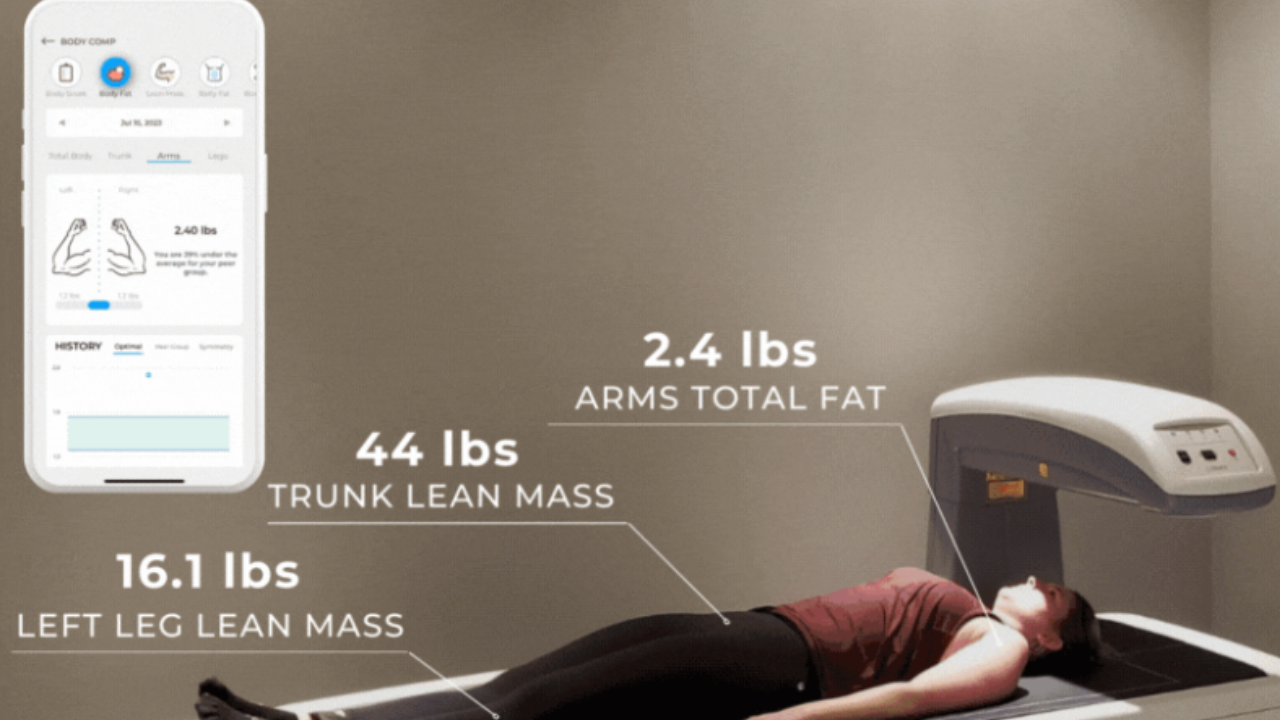
DEXA & Body Composition services can provide additional objective information, particularly if you want to compare changes over time.
But no DEXA result can tell you that you are officially “stage-ready.”
Judges see your physique.
They do not see your scan.
Don't Chase a Magic Stage-Ready Body-Fat Percentage
Search for information about getting stage-ready and you will quickly find precise body-fat percentages presented as if they were entrance requirements.
They aren't.
There is no universal stage-ready body-fat percentage for bodybuilding.
The appropriate visual conditioning differs by category. Individual competitors also look different at the same measured body-fat percentage, and methods of estimating body composition have their own limitations.
More importantly, bodybuilding competitions are judged visually according to federation and division criteria.
That means the useful question is not:
What body-fat percentage do I need to hit?
It is:
Am I displaying the muscularity, shape, proportion and conditioning my division requires?
Body-composition measurements can help you track a process.
They should not replace assessment of the physique itself.
Start Posing While You Still Have Time to Improve
Posing is one of the few parts of competition preparation that you can improve without gaining another pound of muscle or losing another pound of fat.
Yet first-time competitors often leave it too late.
Your posing affects what judges can see.
Poor positioning can make your waist appear wider, hide back development, weaken your proportions or make your legs look less conditioned. Good posing allows you to present the physique you actually built.
And posing gets harder when you are tired.
It is one thing to hit a pose once in front of a mirror.
It is another to hold your position under hot lights while judges compare you, transition when instructed and continue controlling your physique when you are nervous.
Current NPC Worldwide rules demonstrate how category-specific this becomes. Men's Bodybuilding competitors perform mandatory poses including front and back double biceps, lat spreads, side chest, side triceps, abdominals and thighs, and most muscular. Classic Physique uses a different set that includes a favorite classic pose and excludes most muscular.
Learn the requirements for your category.
Then practice them repeatedly.
If you struggle to see your own positioning or don't know how your federation expects the poses to be performed, this is exactly what a Posing Coach can help with.
Practice What You Will Actually Do on Stage
Posing practice should eventually become more realistic than standing comfortably in front of a mirror.
Practice:
-
Entering and exiting your poses
-
Holding them
-
Moving between them cleanly
-
Following imaginary judge commands
-
Keeping control of your midsection
-
Maintaining your lower-body positioning
-
Smiling or maintaining appropriate stage expression
-
Recovering if you make a mistake
-
Performing without constantly checking a mirror
Video is useful here.
A mirror gives immediate feedback, but judges will not give you a mirror onstage. Recording full posing rounds lets you see what happens when you have to hold the presentation yourself.
As the show gets closer, you should know your posing well enough that you are refining it rather than still trying to remember what comes next.
Treat Peak Week as Fine-Tuning, Not Rescue Week
Peak week has acquired almost mythical status in bodybuilding.
It is the final period before the competition, and competitors may make adjustments intended to improve how full, lean, dry or visually sharp the physique appears onstage.
Research has documented bodybuilding practices involving changes to carbohydrate intake, water, sodium, training and other variables during this period. But the evidence for many commonly used peak-week practices remains limited, and individual responses vary considerably.
Most importantly, peak week cannot compensate for being substantially behind.
An evidence-based review of bodybuilding peak-week practices makes this point directly: these strategies are intended to fine-tune an already prepared physique, not create a competition-ready physique that wasn't there beforehand.
That is a much healthier way to think about the final week.
If you are noticeably behind on conditioning shortly before the show, extreme last-minute manipulation is not a reliable solution.
Be Particularly Careful With Water and Sodium Manipulation
This deserves separate attention because some traditional bodybuilding practices can carry real health risks.
Competitors sometimes manipulate water and sodium in an attempt to appear “drier” onstage.
That does not mean aggressive dehydration is a necessary part of bodybuilding.
Research reviewing peak-week practices has found limited evidence supporting many commonly used water and sodium manipulation strategies. Published case reports have also documented serious medical problems associated with extreme fluid and electrolyte practices.
Do not copy a dehydration protocol from another competitor, social-media post or old bodybuilding forum.
Do not assume that something is safe because experienced competitors have done it.
And do not treat diuretics or extreme manipulation as ordinary cosmetic finishing tools.
Individual health, medications and medical conditions can change the risks further. Potentially dangerous fluid, electrolyte, supplement or dietary practices require appropriate professional guidance.
Stage-ready should never mean barely healthy enough to walk onstage.
Get Your Competition Tan Sorted Before Show Day
Stage lighting changes how a physique appears.
That is why competition tanning is so common in bodybuilding. It helps make muscular definition visible under strong stage lighting and creates a more consistent presentation.
But competition tanning is not simply the same thing as getting an ordinary spray tan.
Bodybuilding tanning services understand competition color, application schedules and the unusual timing of show weekends.
Check your competition information before booking independently.
Promoters frequently work with or recommend particular service providers, and there may be rules governing tanning products.
For example, NPC Worldwide currently prohibits excessive application of tanning products and products that create unnatural orange, yellow, red, green, gold or metallic tones.
If your show has an official or recommended Competition Tanning provider, find out how booking works well before the event.
Do not wait until the night before the competition to discover that appointments are full.
Hair, Makeup, Suit and Trunks Are Part of the Presentation
Your physique remains the central part of the competition, but it is being presented as a complete package.
Different divisions have different attire and presentation rules.
That can include requirements governing posing trunks, board shorts, bikinis, footwear, jewelry and other presentation details.
Read those rules before buying competition clothing.
For divisions where hair and makeup are part of the stage presentation, decide whether you will handle them yourself or book a Competition Hair & Makeup provider.
Again, competition specialists can be useful because they understand show schedules and stage presentation. An ordinary salon appointment at 10 a.m. may not be particularly helpful if athlete check-in or judging requires you somewhere else.
Everything has to fit around the competition timetable.
Decide Whether You Want Competition Photography
After months of preparation, the time you actually spend onstage can be remarkably short.
If you want professional photographs of the result, investigate this before the show.
Many competitions have an official photographer or specific photography arrangements.
Find out:
-
Whether photography is included
-
Whether photographs need to be purchased
-
Whether advance booking is required
-
What images or packages are offered
-
Whether outside professional photography is restricted at the venue
A Competition Photography provider who regularly shoots bodybuilding understands poses, stage lighting and the moments competitors generally want captured.
This is not essential to being physically stage-ready.
But it is one of those details that is easy to remember the day after the competition rather than the week before it.
Know Your Show Schedule Before You Arrive
A surprising amount of being competition-ready has nothing to do with your physique.
You also need to know how the event works.
Read every piece of competitor information the promoter sends you.
Confirm:
-
Registration deadlines
-
Federation membership requirements
-
Check-in time and location
-
Weigh-in or height-check requirements
-
Athlete meeting times
-
Judging and finals schedule
-
Music requirements, if your category uses posing music
-
Venue rules
-
Backstage access
-
Tanning appointments
-
Hair and makeup appointments
-
Photography arrangements
-
Hotel and travel plans
Do not assume your coach will remember every administrative requirement for you.
The current NPC Worldwide rules, for example, contain category-specific requirements covering everything from attire to posing music and competition format.
Your individual promoter may provide additional event-specific instructions.
Put the important times in one place.
Show week is not when you want to search through six emails trying to remember when check-in starts.
Pack for Backstage, Not for a Normal Gym Day
Your competition bag should solve predictable problems.
What you need will depend on your division, federation and event, but think through the entire day:
What will you wear before going onstage?
What do you need for your competition outfit?
What will you use to touch up your presentation?
What food and drinks are part of your established plan?
What do you need for posing or pumping up backstage?
Do you have your identification, registration information and anything required at check-in?
Do you need backup items in case something breaks, spills or disappears?
The point is not to pack half your house.
It is to avoid creating unnecessary stress over something you could have handled the night before.
A written show-day checklist is particularly useful for a first competition.
Do a Stage-Ready Check Before the Final Week
Instead of waiting until the day before the show and asking, “Am I ready?”, assess each part separately.
Physique
Does your physique currently match the muscularity, shape and conditioning expected for your division?
Posing
Can you perform and hold the required poses without relying on a mirror?
Rules
Have you read the current federation and competition-specific requirements?
Registration
Are your federation membership and competition entries complete?
Presentation
Do you have the correct suit, trunks, shoes and other required items?
Services
Are tanning, hair and makeup, photography or other services booked where needed?
Logistics
Do you know your check-in, athlete meeting, judging and finals times?
Travel
Are transportation and accommodation arranged?
Health
Are you approaching the final stage of preparation without relying on dangerous last-minute practices to make the show?
Any “no” on that list gives you something concrete to address.
That is much more useful than staring at your physique every morning and wondering whether you look ready.
Stage-Ready Is More Than Looking Lean
The closer a bodybuilding competition gets, the easier it is to reduce the entire experience to appearance.
Am I lean enough?
Do I look flat?
Do I look watery?
Is my tan dark enough?
Those questions can become consuming because show day has a fixed deadline.
But a competitor who is truly ready has done more than change their physique.
They understand what the judges expect.
They can pose.
They know the rules.
Their services are booked.
Their travel is arranged.
Their competition bag is packed.
They know where to go.
And they are not depending on a dramatic final-week experiment to rescue months of preparation.
If one part of that process is still missing, solve the specific problem rather than simply trying to become “more stage-ready.”
Need help assessing and planning the overall prep? Look for a Contest Prep Coach.
Can't confidently present your physique yet? Work on posing or find a Posing Coach.
Want another way to monitor changes during prep? Compare DEXA & Body Composition services.
Getting the final presentation organized? Check your show's arrangements for Competition Tanning, Competition Photography, and Competition Hair & Makeup.
Stage-ready isn't one measurement or one look.
It is the point at which the physique you prepared, the way you present it and everything required to get you onto that stage are finally ready at the same time.