Do I Need a DEXA Scan for Bodybuilding Contest Prep?
Do I Need a DEXA Scan for Bodybuilding Contest Prep?
No, you do not need a DEXA scan to prepare for a bodybuilding competition.
It isn't a requirement for competing, and a scan cannot tell you whether judges will consider your physique stage-ready.
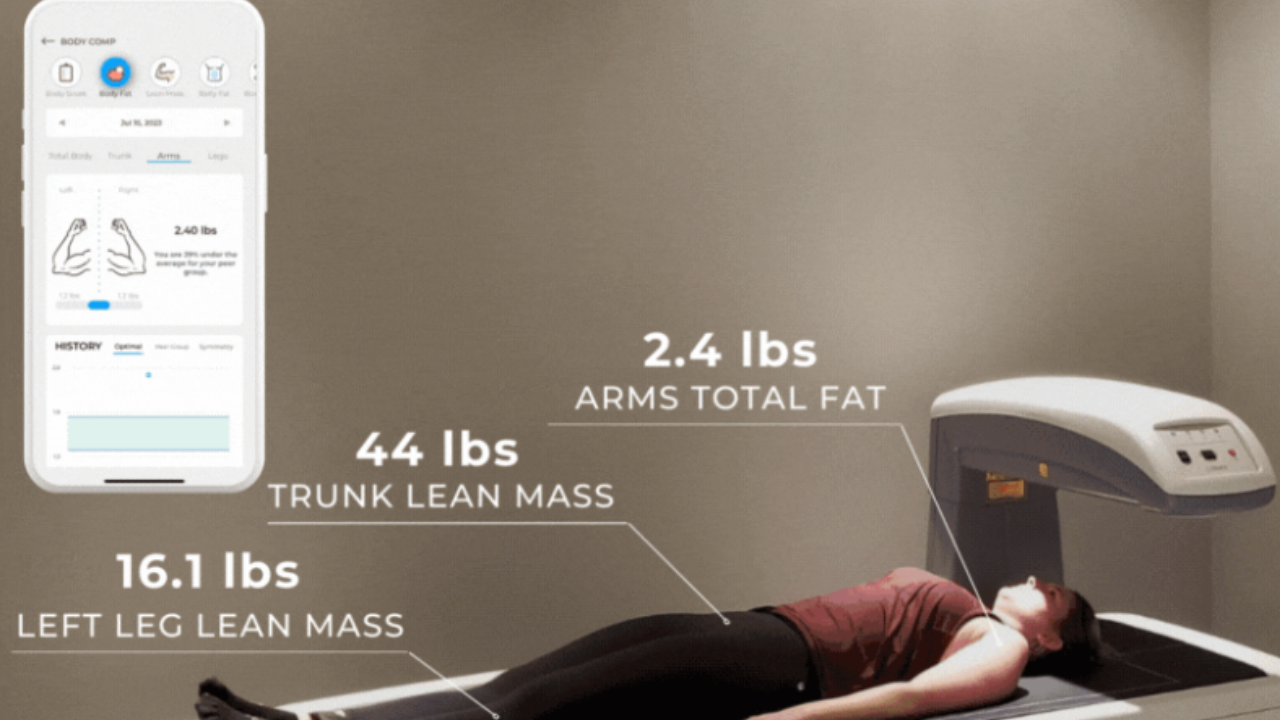
What DEXA can do is give you another way to measure what is happening to your body during prep. A scan can estimate your fat mass, lean mass and bone mineral content and show how those measurements are distributed across different regions of your body.
That can be useful when your goal is to lose substantial body fat while preserving as much lean tissue as possible.
But usefulness depends on what you do with the information.
If you expect DEXA to tell you exactly how lean you need to get, it will disappoint you.
If you use it as one measurement alongside progress photos, body-weight trends, training performance, posing and an experienced assessment of your physique, it can add useful information to your prep.
What Exactly Is a DEXA Scan?
DEXA—also written DXA—stands for dual-energy X-ray absorptiometry.
The technology was originally developed and is widely used to assess bone mineral density. Whole-body DEXA scanning can also estimate body composition.
A body-composition scan generally separates your body into three components:
-
Fat mass
-
Bone mineral
-
Bone-free lean tissue
Depending on the equipment and report, you may also receive regional estimates showing the composition of your arms, legs and trunk.
That makes DEXA more informative than stepping on a scale.
If you weigh 185 pounds, the scale can tell you that you weigh 185 pounds.
It cannot tell you how much of that measured mass is estimated to be fat versus lean tissue.
DEXA tries to provide that additional information.
Why Would a Bodybuilder Want That Information?
Contest preparation creates an unusual body-composition goal.
You are not simply trying to lose weight.
A competitive bodybuilder generally wants to reduce fat mass while maintaining as much of the muscular development required for the division as possible.
Those are not the same thing.
Suppose two competitors each lose 15 pounds during prep.
The scale shows the same result.
But if one athlete preserves substantially more lean tissue while losing fat, the changes taking place underneath that scale weight are different.
This is where body-composition testing becomes interesting.
Research on bodybuilding contest preparation has used body-composition measurements specifically to track changes in fat and lean mass. In one published case study of a female drug-free Figure competitor, researchers used DEXA alongside skinfold measurements throughout a 20-week competition preparation and recovery period. The athlete lost body mass and body fat during prep, and the researchers were able to examine those changes in greater detail than scale weight alone would provide.
That doesn't mean every competitor needs laboratory-style monitoring.
It shows what the measurement can help you understand.
A DEXA Scan Cannot Tell You Whether You're Stage-Ready
This is the most important limitation for a competitive bodybuilder.
Your DEXA report might say:
8.2% body fat.
That does not mean:
Ready to compete.
Bodybuilding judges don't award placings according to DEXA results.
They see your physique.
They assess characteristics such as muscularity, conditioning, symmetry, proportions and presentation according to the standards of your division.
That distinction becomes particularly important because different divisions call for different physiques.
A stage-ready Bikini competitor should not have the same appearance as a Women's Physique competitor.
Men's Physique and Men's Bodybuilding have different muscularity and conditioning expectations.
Classic Physique has its own standard.
So even if DEXA could measure your body-fat percentage with perfect precision, there still wouldn't be one DEXA result that means “competition-ready.”
Use the scan to measure.
Use the judging criteria to understand what you're trying to present.
How Accurate Is DEXA for Body Fat?
DEXA is a sophisticated and useful body-composition tool.
It is not an infallible body-fat detector.
A methodology review specifically examining DEXA in athletes notes that the technology has become increasingly popular for monitoring athletic body composition, but also identifies sources of measurement error and variability. The researchers emphasize standardized scanning conditions when athletes are being compared over time.
That's an important distinction.
A DEXA result may look extraordinarily precise:
11.7% body fat
looks much more authoritative than:
around 12%.
But the decimal point doesn't eliminate measurement uncertainty.
The International Olympic Committee-sponsored review on body composition in weight-sensitive sports went further, noting that there is no single “gold standard” method for assessing body composition in athletes.
DEXA is useful.
Don't mistake useful for perfect.
Why Can DEXA Results Change?
Your body isn't a static object.
Food, fluid, glycogen and exercise can affect the conditions under which measurements are taken.
That matters particularly for bodybuilders.
One study examining DEXA measurements in active people found that exercise and the associated intake of food and fluid introduced additional variability into body-composition estimates. The researchers concluded that having subjects rested and fasted was a practical way to reduce this biological “noise.”
Another review notes that changes in muscle glycogen and creatine can alter muscle hydration and affect DEXA estimates of lean body mass.
Think about how relevant that is during contest prep.
Carbohydrate intake can change.
Training volume can change.
Body water can change.
And during peak week, some competitors make substantial changes to carbohydrate, food and fluid intake.
If your DEXA measurement changes, not every gram of apparent lean-mass movement necessarily represents newly gained or lost muscle tissue.
Consistency Matters More Than Chasing a Perfect Scan
If you're going to use DEXA to compare changes during prep, try to make the comparisons meaningful.
Research recommendations for athletic DEXA testing emphasize standardizing the athlete's condition and positioning during scans. One proposed best-practice approach includes being rested and overnight fasted and using consistent positioning during the assessment.
You should also follow the preparation instructions provided by the facility performing your scan.
The bigger principle is simple:
Compare like with like whenever possible.
If your first scan occurs after breakfast and a hard leg workout, while the second happens early in the morning after resting, some of the apparent change could reflect different testing conditions rather than a true change in body tissue.
That doesn't make the scans worthless.
It makes standardization important.
When Should You Get a DEXA Scan During Contest Prep?
There isn't an official bodybuilding DEXA schedule.
For many competitors who want to use DEXA, the most useful approach is to think in terms of decision points, not arbitrary calendar dates.
Before Prep
A baseline scan can give you a starting point.
You can record estimated fat mass and lean mass before the major dieting phase begins.
Later measurements then have something meaningful to compare against.
During Prep
A repeat scan can show how body composition appears to be changing.
This may be useful if you've lost significant body weight and want another measurement beyond photographs and the scale.
The question isn't simply:
How much lighter am I?
It becomes:
What does the scan suggest has happened to fat mass and lean mass while my weight has changed?
After the Competition
A post-competition or recovery-period scan can be useful if you're interested in tracking the complete process rather than only the dieting phase.
Bodybuilding research has followed competitors through both preparation and recovery precisely because contest condition is temporary.
None of these scans is mandatory.
And more scans are not automatically better.
Do You Need a DEXA Scan Every Month?
Probably not simply for the sake of collecting numbers.
A body-composition measurement is valuable when it helps answer a useful question.
If you scan so frequently that normal measurement variability becomes as large as the change you're trying to detect, the extra information may not tell you very much.
Ask yourself what you would actually do differently based on the result.
If the answer is “nothing,” you may not need another scan yet.
For most competitors, progress photographs, body weight, measurements, training performance and posing provide information much more frequently.
DEXA can be an occasional additional checkpoint rather than another number you feel obligated to monitor every week.
DEXA vs. the Scale
The scale has one enormous advantage.
It is simple.
You can measure body weight regularly at home under reasonably consistent conditions and look at the trend over time.
That makes scale weight useful during contest prep.
But scale weight doesn't distinguish between different types of mass.
DEXA provides more detail by estimating fat mass and lean tissue.
The tradeoff is that DEXA costs money, requires access to appropriate equipment and should not be interpreted with the same frequency or simplicity as stepping on a bathroom scale.
You don't have to choose one or the other.
They answer different questions.
DEXA vs. Skinfold Measurements
Skinfold measurements are another longstanding way of estimating body composition.
A trained practitioner measures skinfold thickness at specific sites and uses those measurements—sometimes with prediction equations—to estimate body fat.
The advantages are obvious.
Skinfold testing is comparatively simple, inexpensive and repeatable.
But technique matters considerably.
Results can vary according to the skill of the person taking the measurements and the equation used to estimate body-fat percentage.
Interestingly, bodybuilding research has used both approaches.
The female Figure competitor case study mentioned earlier used DEXA and seven-site skinfold measurements to track body-composition changes through prep.
That reinforces an important point:
There is no requirement to crown one method the winner.
Choose a measurement that is useful, accessible and repeatable for your purpose.
DEXA vs. Smart Scales and Bioelectrical Impedance
Many bathroom scales and handheld devices estimate body composition using bioelectrical impedance analysis, or BIA.
They are convenient.
You can stand on a scale and receive a body-fat estimate in seconds.
But those estimates are sensitive to testing conditions, particularly hydration and other variables. An NIH assessment of BIA noted that measurements can be affected by hydration, food and drink, recent physical activity, body position and other factors.
For a bodybuilder whose food, training and hydration can vary significantly during prep, that matters.
A smart scale can still be useful for observing trends if used consistently.
Just don't treat a daily body-fat percentage displayed on your bathroom scale as a daily laboratory assessment of your physique.
Can DEXA Tell Whether You're Losing Muscle?
It can provide useful information about changes in estimated lean mass.
But be careful with the language.
DEXA measures lean soft tissue. It doesn't directly measure the amount of contractile skeletal muscle you possess in the way many competitors imagine when they see “lean mass” on a report.
Lean tissue includes water and other non-fat tissue.
And because glycogen and hydration can influence lean-mass estimates, a change in DEXA lean mass should not automatically be interpreted as exactly the same amount of muscle gained or lost.
That matters during contest prep because preserving muscle is such an important goal.
If a scan reports that lean mass has fallen, don't panic over one measurement.
Look at the context.
What happened to your body weight?
What happened to your strength and training performance?
How do your progress photographs look?
Were the scans conducted under similar conditions?
What does your coach think is happening?
A trend supported by multiple indicators is more useful than reacting dramatically to one number.
Can DEXA Help You Choose a Bodybuilding Division?
Not by itself.
Suppose a DEXA scan tells you that you have a particular amount of lean mass.
That does not tell you whether you belong in Classic Physique, Men's Physique or Men's Bodybuilding.
It doesn't tell a female competitor whether her structure and muscular development are better suited to Bikini, Wellness or Figure.
Division selection involves:
-
Muscular development
-
Where that muscle is distributed
-
Body structure
-
Proportion
-
Shape
-
Conditioning
-
Presentation
-
Federation criteria
Those are visual and competitive considerations.
A knowledgeable Contest Prep Coach can help assess where your physique fits much more directly than a body-fat report can.
DEXA Can Be Particularly Useful as a Baseline
If you decide to have only one or two scans, a baseline measurement may be more informative than waiting until you're nearly onstage.
Why?
Because change requires a comparison.
Knowing that you have 18 pounds of estimated fat mass today tells you something.
Knowing that you began prep with 32 pounds under comparable testing conditions tells you much more about the direction of the process.
The same applies to estimated lean mass.
A baseline gives later measurements context.
This is why waiting until three days before the competition and getting your first-ever DEXA scan often produces an interesting number rather than particularly actionable information.
You have nothing comparable from your own prep to put beside it.
Don't Use DEXA to Decide How Extreme Your Prep Should Become
This is where a useful measurement can become counterproductive.
Suppose your scan reports 8% body fat.
You had convinced yourself you needed to reach 6%.
That two-point difference does not mean you should automatically increase calorie restriction, add excessive cardio, dehydrate yourself or take other aggressive measures.
There is no universal body-fat percentage required for bodybuilding competition.
And contest preparation itself can place considerable physiological demands on athletes.
Research on physique competitors has documented changes during preparation involving hormones, metabolic rate, menstrual function and other physiological and psychological outcomes.
Use measurements to inform decisions.
Don't let them dictate increasingly extreme behavior simply because you want to make the number smaller.
If preparation is causing concerning physical or psychological symptoms, seek appropriate healthcare support.
Should You Get a DEXA Scan During Peak Week?
Usually, there is little reason to get your first DEXA scan during peak week simply to determine whether you're ready.
Peak week is a particularly complicated time for body-composition measurements.
Research examining a bodybuilder through peak week found measurable changes in DEXA lean body mass alongside changes in total body water, intracellular water, carbohydrate intake and muscle thickness.
That is a useful demonstration of why a DEXA number has to be interpreted in context.
Your tissues did not suddenly transform into a completely different amount of actual muscle over several days.
Short-term changes in glycogen and water can influence what body-composition testing reports.
If your purpose is tracking fat loss across the broader contest prep, a well-standardized measurement earlier in the process may be more useful than obsessing over a peak-week percentage.
What Should You Ask a DEXA Provider?
If you're looking at DEXA & Body Composition services, don't choose solely on price.
Ask what kind of scan they provide and what the report includes.
Useful questions include:
-
Is this a whole-body body-composition DEXA scan?
-
Does the report include estimated fat mass and lean mass?
-
Does it provide regional body-composition information?
-
What preparation instructions should I follow?
-
How should I standardize conditions for repeat scans?
-
Will someone explain the report?
-
Can I receive a copy of my results?
-
Is the same equipment likely to be available for future scans?
-
Are there package prices for repeat testing?
Tell the provider that you're interested in tracking changes during bodybuilding contest prep.
That helps them understand why consistency between measurements matters to you.
Who Probably Doesn't Need a DEXA Scan?
You probably don't need one simply because other competitors are posting their results.
You also don't need DEXA to prove that you are serious about bodybuilding.
If your budget is limited and you are choosing between a body-composition scan and something that directly addresses an obvious weakness in your preparation, the other service may be more useful.
If you cannot perform your mandatory poses, for example, spending money on a Posing Coach may have a more direct effect on what the judges eventually see.
If you have no idea whether your current physique is appropriate for the show you've chosen, experienced contest-prep guidance may be more valuable than knowing your estimated body-fat percentage to one decimal place.
Testing should solve a problem.
It shouldn't create another number to worry about.
Who Might Find DEXA Particularly Useful?
DEXA may be worth considering if:
-
You want a baseline before beginning prep
-
You want another way to track fat and lean mass changes
-
You're interested in comparing different phases of your preparation
-
You plan to repeat testing under reasonably consistent conditions
-
You enjoy objective data and understand its limitations
-
Your coach wants additional body-composition information
-
You want to track recovery after competition as well as the dieting phase
The key is that you have a reason for collecting the information.
The Best Way to Use DEXA During Contest Prep
Treat the scan as one part of a dashboard.
Your scale tells you how body weight is trending.
Progress photographs show how your physique is changing visually.
Posing reveals what judges will actually see.
Training performance gives you information about what is happening in the gym.
Your coach can assess progress against your division's competitive standard.
DEXA adds another piece:
an estimate of how your body composition is changing.
No one piece tells the whole story.
That is especially important in bodybuilding because the ultimate outcome is visual.
If you want objective body-composition information, finding a reputable DEXA & Body Composition provider and establishing a baseline can be useful.
Then repeat the scan when there is enough change for the comparison to mean something, and try to reproduce the testing conditions as closely as practical.
Just don't ask the scanner a question it cannot answer.
DEXA can tell you a great deal about your estimated body composition.
It cannot tell you whether the physique standing under the stage lights is the physique the judges are looking for.